
The Health Benefits of Hugging

How Embracing Others
Helps Us Embrace Life
"The world is not comprehensible, but it is embraceable through the embracing of one of its beings."
- Martin Buber
Austrian-Israeli Philosopher
Whenever Valentine's Day rolls around, our hearts and minds tend to focus on the loving relationships in our lives.
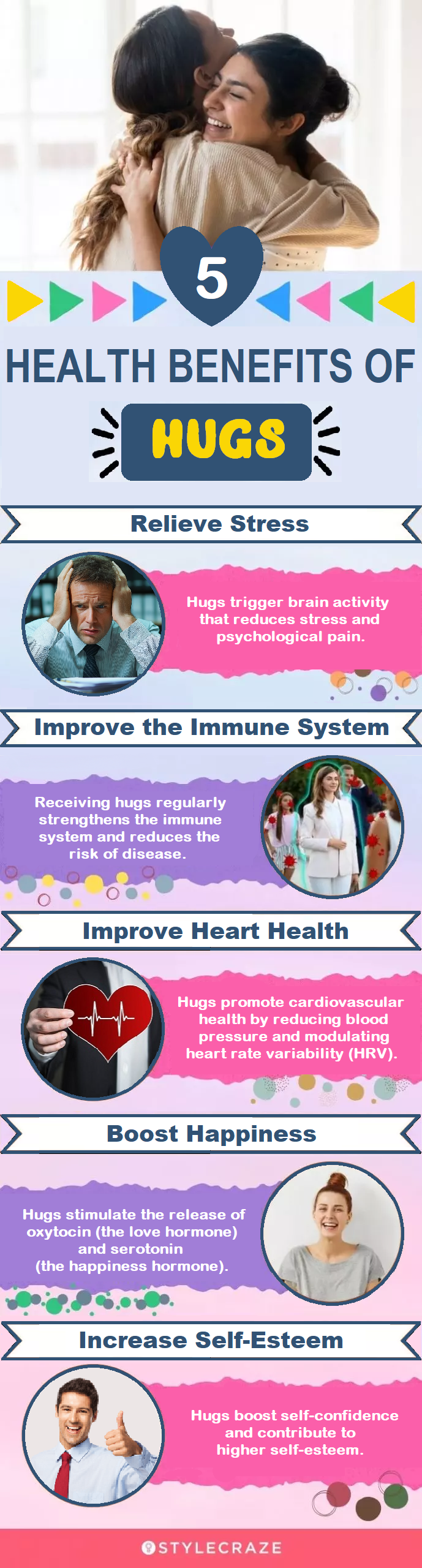
But are you aware of the multiple health benefits associated with each warm embrace you give or receive? Decades of scientific research confirm that the simple act of hugging primes the human immune system and improves both physical and emotional health.
For example, consider a 2015 study in which scientists at Carnegie Mellon University exposed 400 healthy volunteers to the common cold virus over 14 days. Participants who received multiple hugs during that two-week period were 60% less likely to contract the infection than those who were rarely hugged. And the hugged participants who did get sick recovered more quickly and had stronger immune responses than their hug-deprived counterparts.
The Physiology Behind the Stats
There are at least two physiological reasons for these results:
- Gentle pressure on the sternum activates the thymus gland, generating disease-fighting white blood cells.
- Hugs increase circulation in the body's soft tissues, reducing inflammation by delivering healing nutrients to the inflamed area.
This conclusion was confirmed by a 2020 study that revealed a significant association between hugging and fewer proinflammatory molecules. Using saliva samples from 20 adults, researchers found that inflammation was inversely related to the number of hugs these subjects had received over two weeks. In other words, more hugs equal less inflammation.

The Heart of Marriage
A happy marriage can lead to a longer and healthier life, particularly for men.
Ongoing research from the Framingham Offspring Study evaluated 3,682 adults over 10 years and found that married men had a 46% lower death rate than unmarried men, regardless of major cardiovascular risk factors.
In a similar study, Japanese scientists reported that never-married men were three times more likely to die from cardiovascular disease than married men.
Then, in 2023, researchers from the American College of Cardiology found that lifelong bachelors are more than twice as likely to die from heart failure within five years of diagnosis than married men or women of any marital status.
Source: Harvard Health
"Cuddle Nerves" and "Feel-Good" Hormones
Upon closer examination, the physiological effects of embracing someone encompass both neurobiological and neurochemical impacts.
Neurobiologically, hugging stimulates C-tactile afferents, sensory receptors under the skin, known as "cuddle nerves." These nerves send signals directly to the brain's center for emotional processing (the insular cortex), releasing endorphins — the body's natural painkillers and mood enhancers.
From a neurochemical standpoint, hugging triggers the release of several feel-good brain chemicals, primarily oxytocin (the "love hormone"), dopamine (the "pleasure hormone"), and serotonin (the "happiness hormone"). When oxytocin binds to specific sites along the central nervous system, it can significantly reduce chronic pain.
Hugs All Around
Physical touch also improves cardiovascular health by increasing heart rate variability, a crucial measure of how well the body responds to stress. (See sidebar, "The Heart of Marriage.”)
A 2003 study revealed that hugging contributes to lower reactivity to a specific stressful life event: public speaking. In this study, couples who held hands for 10 minutes, followed by a 20-second hug before delivering a speech, exhibited blood pressure and heart rate measurements that were 50% lower than those without prestress partner contact.
Research published in the International Journal of Environmental Research and Public Health in 2023 revealed the carryover effects of hugging. This study found that first-year college students who received daily hugs from friends and family members demonstrated reduced stress levels the following morning.
In addition, the Journal of Sleep Research reported in 2024 that adults who receive consistent physical comfort sleep more soundly and wake more refreshed than those lacking such contact.
Hold It!
How long should a hug be for maximum physical benefit? As it turns out, there is a hug-duration sweet spot between the two extremes of the awkward, too-short hug that leaves you feeling shortchanged and the over-hugger who clings like a koala to a eucalyptus tree.
—Article Continues Below—
Researchers who tested different hug styles and durations have discovered precise requirements for optimal health benefits: five to ten seconds. (Of course, hugs should always be consensual, regardless of duration.)
For intimate relationships, a 20-second embrace produces the strongest measurable benefits.
Wrapping It Up
Hugging is a powerful tool for enhancing health and well-being that requires no expensive equipment, special training, or pharmaceutical intervention. People who are consistently hugged report better overall physical, emotional, and mental health, as well as improved medical outcomes, compared to those who are hug-deprived. Every embrace we give or receive helps us embrace life more fully.
Have you hugged someone today?
Sources:
Featured Image: Adobe, License Granted
National Center for Biotechnology Information
American Heart Association
ScienceAlert
The Epoch Times
MedicineNet
NeuroLaunch
Recent Posts










Share On: